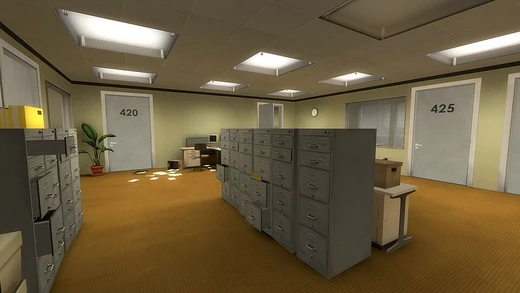
Death Stranding
A post-apocalyptic courier game about reconnecting a fractured America.

Zion Grassl · CC BY-SA 4.0
Death Stranding is an action-adventure game from 2019, developed by Kojima Productions and published by Sony Interactive Entertainment. It marks the first project from director Hideo Kojima and his studio after they left Konami in 2015. The game originally launched on PlayStation 4 in November 2019, with a Windows version following in July 2020. A director’s cut arrived on PlayStation 5 in September 2021, later appearing on Windows in March 2022, on Apple platforms in January 2024, and on Amazon Luna and Xbox Series X/S in November 2024. Sony handled publishing on its consoles, while 505 Games published all other versions under license from Kojima Productions.
The story takes place in a United States devastated by a catastrophe that unleashed invisible, destructive creatures called Beached Things (BTs) across the land. Players control Sam Porter Bridges, played by Norman Reedus, a courier who must deliver supplies to scattered colonies and link them through a wireless network. He is hunted by a genocidal militia led by a masked figure named Higgs, who seeks to destroy the last of humanity. The cast also includes Mads Mikkelsen, Léa Seydoux, Margaret Qualley, Troy Baker, Tommie Earl Jenkins, and Lindsay Wagner, along with the likenesses of filmmakers Guillermo del Toro and Nicolas Winding Refn as supporting characters.
Critics generally praised the game, highlighting its voice acting, soundtrack, and visuals, though opinions on its gameplay and story were more divided. It earned numerous Game of the Year awards in 2019, more than any other title that year, and had sold 5 million copies by March 2021. After the COVID-19 pandemic began shortly after the game’s release, many observers noted parallels between its themes and real-world events.
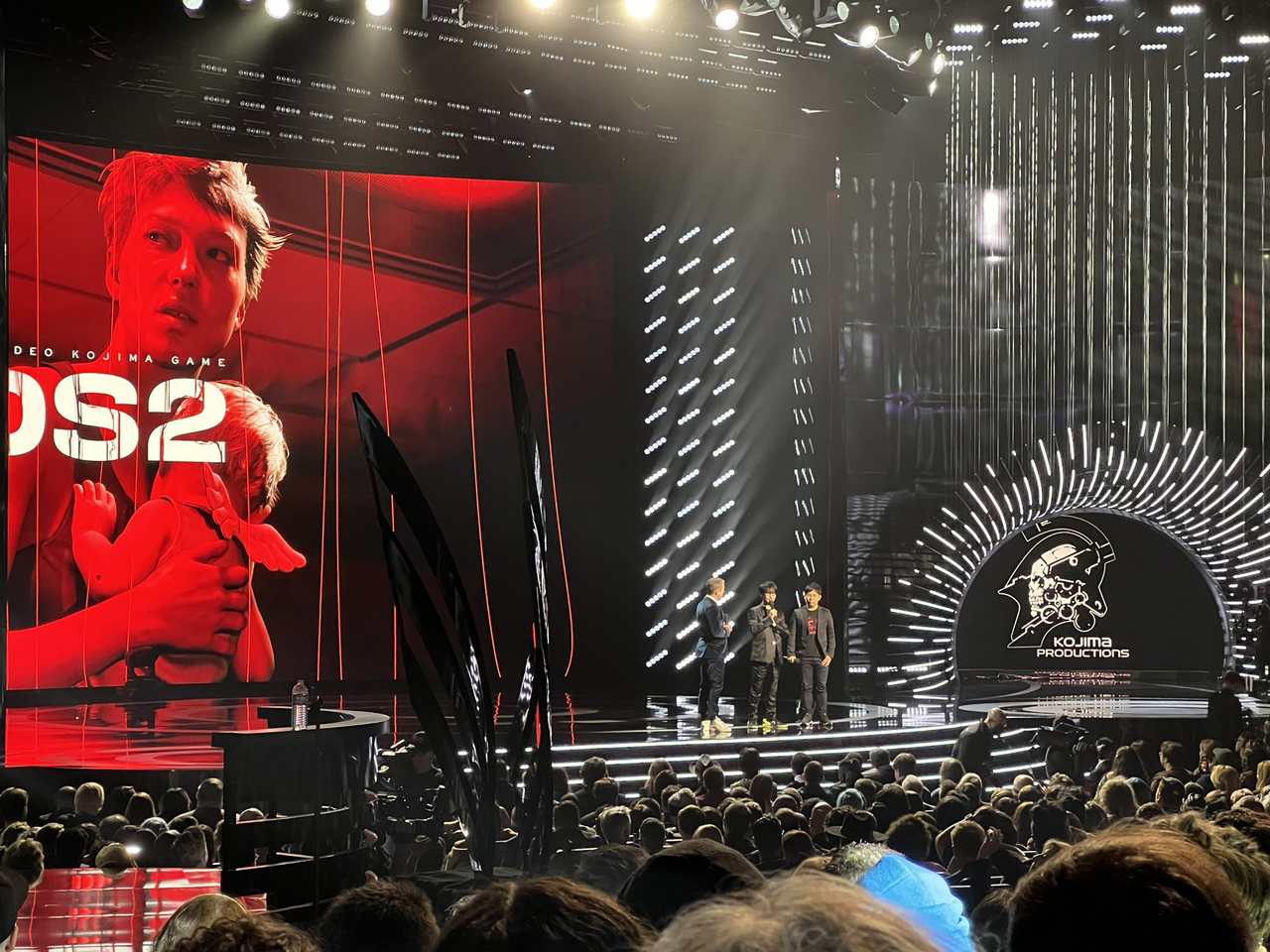
A sequel, Death Stranding 2: On the Beach, has been announced but has no confirmed release date yet. Two film adaptations and a television series are also in development.
Gameplay
Death Stranding is an open-world action-adventure game with asynchronous online features. Kojima calls it the first “strand game,” a genre defined by its social mechanics. He compares this to how his earlier game Metal Gear was labeled an action game at launch because the stealth genre didn’t yet exist.
Players control Sam Bridges, a porter for a company called Bridges. The main goal is to deliver cargo to isolated settlements known as Knots,
- Release Year
- 2019
- Developer
- Kojima Productions
- Publisher
- Sony Interactive Entertainment (consoles), 505 Games (other versions)
- Genre
- Action-adventure, open world, 'strand game'
- Platforms
- PlayStation 4, Windows, PlayStation 5, iOS, iPadOS, macOS, Amazon Luna, Xbox Series X/S
- Director
- Hideo Kojima
- Sales
- 5 million copies worldwide as of March 2021
Lore & Background
Death Stranding is set in the United States after a cataclysmic event known as the 'Death Stranding' caused invisible creatures called 'Beached Things' (BTs) to roam the Earth. BTs originate from the 'Beach', lands unique to each person that link to the afterlife. They produce 'Timefall' rain that rapidly ages and deteriorates whatever it hits. The player controls Sam Porter Bridges (Norman Reedus), a courier for the company Bridges, tasked with delivering supplies to isolated colonies known as Knot Cities and connecting them to a communications system called the Chiral Network. Sam is a 'repatriate' who can return from death, and he uses a 'Bridge Baby' (BB) to sense BTs. He is pursued by a genocidal militia group led by Higgs, who intends to wipe out humanity. The game features actors Mads Mikkelsen, Léa Seydoux, Margaret Qualley, Troy Baker, Tommie Earl Jenkins, and Lindsay Wagner, as well as the likenesses of film directors Guillermo del Toro and Nicolas Winding Refn.
Reader's Guide
Death Stranding received generally positive reviews, with critics praising its voice acting, soundtrack, and visuals, while opinions on its gameplay and story were more mixed. It won the most Game of the Year awards of any game in 2019. As of March 2021, it had sold 5 million copies worldwide. Numerous commentators later noted that elements of the game resembled the COVID-19 pandemic, which began in the months following its original release. The game is considered the first 'strand game', a genre defined by its social and asynchronous online elements, where players can leave supplies, structures, and messages for others. Its use of licensed music, particularly from the band Low Roar, was integral to the game's atmosphere; after the death of Low Roar's frontman Ryan Karazija in 2022, Kojima stated that without Low Roar, Death Stranding would not have been born. A sequel, Death Stranding 2: On the Beach, released on June 26, 2025, for PlayStation 5, and two film adaptations and a television series are concurrently in development.
Did You Know?
- Death Stranding is the first game from Hideo Kojima and Kojima Productions after their split from Konami in 2015.
- The game's music heavily features the band Low Roar; Kojima said without Low Roar, Death Stranding would not have been born.
- The game's online functionality allows players to leave supplies, structures, and messages for other players, but players do not directly encounter each other.
- A sequel, Death Stranding 2: On the Beach, was released on June 26, 2025, for PlayStation 5.
A Major Title in an Indie-Dominated Genre
Walking simulators have long been defined by their origins in independent development, with most titles in the category crafted by small studios or solo creators. Games like Dear Esther, Gone Home, and Firewatch all emerged from indie teams, establishing a tradition where limited budgets paired with bold artistic vision produced some of the most memorable experiences in the medium. Into this landscape, Death Stranding stands out as a notable exception: a major, high-profile title that has nonetheless been described by observers as a walking simulator. This classification places the game in direct contrast to the genre's typical indie pedigree, suggesting that the design philosophy of exploration-first, combat-light gameplay has crossed over from the independent scene into the mainstream commercial space. The fact that a title of Death Stranding's scale can be grouped alongside smaller, more intimate works speaks to how broadly the walking sim label has been applied, encompassing anything from a quiet island stroll to a sprawling, ambitious production.
The Weight of a Pejorative Label
The phrase "walking simulator" entered gaming vocabulary in the late 2000s as a dismissive shorthand, first hurled at titles like Dear Esther by players who felt the absence of combat and fail states disqualified them from being called games. Critics aligned with the Gamergate movement and self-identified hardcore gamers pushed back hardest, arguing that any experience without a challenge mechanic or a way to lose simply was not a game at all. Game developers, including Dan Pinchbeck of Dear Esther, pushed back against this narrow framing, insisting on a broader, more inclusive definition of what interactive entertainment could be. Over time, the very term that was meant to belittle was reclaimed by the community; it now appears as a searchable tag on Steam, helping players discover titles they enjoy. For a major title like Death Stranding, being slotted under this label carries that entire history of debate. It means the game is simultaneously celebrated for its emphasis on movement, environment, and narrative, and questioned by those who still see the lack of traditional combat as a deficiency rather than a design choice.
Exploration as the Core Experience
At the heart of every walking simulator lies a single, defining promise: the player is dropped into an unfamiliar world and must make sense of it through movement and observation. Whether the setting is a mundane suburban landscape or a fantastical dreamscape, the task is to uncover who or what inhabits the space and whether it poses a threat. Most titles in this category deliberately strip away the systems that define other genres—no combat encounters, no resource management, no economic progression. Some lean into horror, removing the player's ability to fight back entirely so that tension and emotional response become the primary gameplay currency. The artistic ambition and the focus on moral or decision-making moments within these games have been widely appreciated, and those design values have bled into mainstream titles as well. Death Stranding, frequently cited as a walking sim, sits squarely within this tradition of prioritizing traversal, environmental storytelling, and the slow accumulation of understanding over reflexive action or score-chasing.
From ZX Spectrum to the Modern Era
The lineage of the walking simulator stretches back to the 1980s, when Graham Relf built The Forest for the ZX Spectrum as an orienteering exercise, and its successor Explorer generated forty billion procedurally combined locations on a forested alien world. Both were commercial failures, dismissed as tech demos. The genre found its modern voice in 2012 with Dear Esther, a breakout hit that proved a first-person island exploration could earn widespread critical praise despite its radical lack of traditional mechanics. It was followed quickly by Gone Home in 2013, The Vanishing of Ethan Carter in 2014, and Firewatch in 2016, a year in which three of the BAFTA Games Award winners were walking simulators. By the 2020s, the aesthetic had evolved again, with liminal-space titles like The Exit 8 and Pools carrying the torch. Throughout this entire arc, the genre remained overwhelmingly an indie phenomenon—until major titles like Death Stranding were pointed to as evidence that the walking sim philosophy had broken through into the commercial mainstream.
Gallery




Frequently Asked Questions
What is Death Stranding?
Death Stranding is a 2019 action-adventure game from Kojima Productions in which you play as a courier crossing a shattered, post-apocalyptic United States. The core loop centers on hauling cargo between isolated settlements while managing a living baby scanner and avoiding supernatural threats. It was Hideo Kojima's first title after his 2015 split from Konami.
Who is the main character in Death Stranding?
You control Sam Porter Bridges, a lone courier whose job is to re-link the fragmented communities of a broken America. He carries a living infant called a BB in a front sling, which functions as a real-time detector for the ghostly entities that haunt the landscape.
What are BTs in Death Stranding?
BTs, short for Beached Things, are translucent, corpse-like specters that drift through the open world and will drag you into a death loop if they touch you. They are strongly attracted to the living BB you carry, so keeping the baby's heart rate low and staying away from high-density zones are essential survival tactics.
How does Death Stranding end?
In the final act Sam journeys to the Far East to confront the source of the Death Stranding phenomenon and sever the tether binding the world to death. The game closes with the BTs fading, the landscape healing, and Sam's daughter Fragile growing up in a reconnected society.
Who developed and published Death Stranding?
Kojima Productions developed the game, while Sony Interactive Entertainment published it on PlayStation and 505 Games handled the PC and other platform releases. It debuted on PS4 in November 2019, arrived on Windows in July 2020, and saw a Director's Cut on PS5 in September 2021 before expanding to additional platforms through 2024.
More in Walking simulators 1-24
Spotted an error? Know more?
This is a living reference — every entry is fact-audited, and reader corrections feed straight into our audit queue. Suggest an edit · See this site's audit record