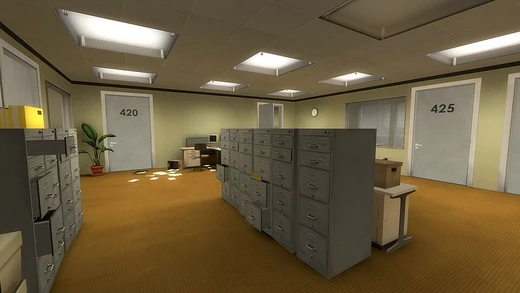
Elegy for a Dead World
A side-scrolling exploration game with collaborative diary writing.

Thomas Gray · Public domain
Elegy for a Dead World, released in 2014, is a side-scrolling exploration game where players keep a diary that others can read. The game sends players through three worlds, each inspired by the British Romantic poets Shelley, Byron, and Keats. As they explore, players jot down observations, and these notes are publicly shared through Steam Workshop. This collaborative note-taking feature earned the game an honorable mention in the Nuovo Award category at the 2014 Independent Games Festival.
Developer Ziba Scott has said the game’s theme stems from his fondness for British Romantic poetry. For instance, the world based on Shelley draws from his poem "Ozymandias." Fellow developer Ichiro Lambe has explored how collaborative writing can foster a sense of intimacy.
Early reviews focused on the novelty of the note-taking mechanic and the game’s prioritization of narrative storytelling over action. On Metacritic, the game holds a score of 65 out of 100 from 14 reviews, indicating mixed or average reception. Hardcore Gamer gave it a 4 out of 5, noting that while *Elegy for a Dead World* may be a jarring departure from tradition, it is an idea worth encouraging, unlike more pretentious attempts at alternative gaming experiences.
- Release
- 2014
- Genre
- Side-scrolling exploration
- Developer
- Ziba Scott, Ichiro Lambe
- Notable Feature
- Player-written diary visible via Steam Workshop
- Metacritic Score
- 65/100 (14 reviews, mixed or average)
- Award
- Honorable mention, Nuovo Award, 2014 Independent Games Festival
Lore & Background
Elegy for a Dead World was developed by Ziba Scott and Ichiro Lambe. Scott credits the game's theme to his love for British romantic poetry, with the three worlds inspired by the poets Shelley, Byron, and Keats. For example, Shelley's world was inspired by Percy Bysshe Shelley's poem 'Ozymandias'. Lambe explored the intimacy created through collaborative writing.
The game is a side-scrolling exploration title where the player writes a diary based on observations made while exploring. These notes are publicly visible via Steam Workshop, allowing other players to read them. The collective note-taking mechanic earned the game an honorable mention for the Nuovo Award at the 2014 Independent Games Festival.
Early critical reception focused on the novelty of the note-taking mechanic and the emphasis on narrative storytelling over action. On Metacritic, the game holds a score of 65/100 based on 14 reviews, indicating 'mixed or average reviews'. Hardcore Gamer gave the game a 4 out of 5, stating it 'may be a jarring departure from traditions, but unlike the more pretentious attempts at alternative gaming experiences we’ve seen in recent times, this is one idea that should be encouraged.'
Reader's Guide
Elegy for a Dead World is significant as an experimental game that prioritizes player-generated narrative over traditional action gameplay. Its core mechanic—writing a diary visible to other players via Steam Workshop—creates a shared, collaborative storytelling experience. The game's three worlds, each inspired by a British romantic poet (Shelley, Byron, Keats), ground the exploration in literary themes, with Shelley's world directly referencing 'Ozymandias'. The game received an honorable mention for the Nuovo Award at the 2014 Independent Games Festival, highlighting its innovative approach to player interaction and narrative. Critical reception was mixed, with a Metacritic score of 65/100, but reviewers praised the novelty of the note-taking mechanic and the focus on storytelling. Hardcore Gamer's 4/5 review encouraged the idea as a departure from tradition. The game's legacy lies in its demonstration of how player-created content can be integrated into a game's core loop, influencing later titles that explore collaborative writing and exploration.
Did You Know?
- Elegy for a Dead World is a 2014 side-scrolling exploration game where the player writes a diary visible to other players.
- The game explores three worlds inspired by British romantic poets Shelley, Byron, and Keats.
- It earned an honorable mention for the Nuovo Award at the 2014 Independent Games Festival.
- Developer Ziba Scott credits the theme to his love for British romantic poetry; Shelley's world was inspired by Percy Bysshe Shelley's poem 'Ozymandias'.
The Living Diary
Elegy for a Dead World (2014) reimagines the side-scrolling exploration genre by making the player's written observations the true currency of the experience. Rather than collecting items or defeating enemies, the player wanders through three distinct worlds, each drawing its atmosphere and imagery from a different British romantic poet—Shelley, Byron, and Keats. As the character moves through these landscapes, the player jots down notes about what they see, effectively composing a personal diary. What sets the game apart is that these entries are not private; they are published to the Steam Workshop, where other players can read them. This transforms a solitary exploration into a shared literary space, where every traveler's impressions of the same world sit side by side. The result is a game that treats observation and reflection as its core loop, asking players to slow down, look closely, and articulate what they find. The collective note-taking mechanic became the game's most discussed feature, earning it an honorable mention for the Nuovo Award at the 2014 Independent Games Festival.
Poetry as Blueprint
The creative foundation of Elegy for a Dead World is rooted in a deep personal connection to British romantic poetry. Developer Ziba Scott has credited his love for this literary tradition as the driving force behind the game's thematic direction. This influence is most visible in the world built around Shelley, which draws directly from Percy Bysshe Shelley's poem "Ozymandias," translating the poem's meditation on impermanence and decay into an explorable environment. The other two worlds similarly channel the sensibilities of Byron and Keats, giving each region a distinct poetic voice. Beyond the thematic layer, developer Ichiro Lambe has spoken about exploring the intimacy that emerges when players engage in collaborative writing. The game's design invites strangers to read one another's observations of the same landscape, creating a quiet, unexpected form of connection. In this way, the developers treated poetry not merely as decorative inspiration but as a structural principle—shaping how the worlds feel, how the player moves through them, and how the community interacts with the text they collectively produce.
A Mixed but Respectful Reception
Critical response to Elegy for a Dead World centered largely on two qualities: the novelty of its note-taking mechanic and its deliberate prioritization of narrative storytelling over traditional action. Reviewers recognized that the game asked players to engage in a fundamentally different kind of play, one built around observation and reflection rather than reflexes or combat. On Metacritic, the title settled at 65 out of 100 based on 14 reviews, landing in the "mixed or average" range—a score that suggests the game divided opinion rather than uniting critics. Hardcore Gamer offered a notably positive assessment, awarding the game 4 out of 5 and acknowledging it as "a jarring departure from traditions." What made their praise stand out was the explicit encouragement: they contrasted Elegy with "more pretentious attempts at alternative gaming experiences" and called it "one idea that should be encouraged." This framing positioned the game not as a failed experiment but as a worthwhile risk, one that expanded the vocabulary of what a video game could ask of its audience.
Redefining the Exploration Loop
The most consequential innovation in Elegy for a Dead World is its collective note-taking system, which earned the game an honorable mention for the Nuovo Award at the 2014 Independent Games Festival. By publishing every player's diary entries to the Steam Workshop, the developers turned a single-player exploration into a communal literary project. No two players experience the same world in isolation; instead, the landscape is layered with the accumulated impressions of everyone who has walked it. This mechanic challenged the assumption that exploration games must be solitary or that player-generated content is limited to mods and user-created levels. The game demonstrated that even the simplest act of writing down what you see could become a shared, evolving text. In the broader context of indie game design, Elegy for a Dead World stood as a reminder that interactivity does not always require verbs like "jump" or "shoot." Sometimes the most meaningful interaction is reading a stranger's quiet observation of a ruined tower and feeling, briefly, that you were not the only one who noticed it.
Gallery
Frequently Asked Questions
What is Elegy for a Dead World?
It is a 2014 side-scrolling exploration game in which players wander through three distinct environments while recording observations in a personal diary. The project was developed by Ziba Scott and Ichiro Lambe and draws its themes from British Romantic poetry.
What are the three worlds in Elegy for a Dead World based on?
Each of the three environments takes its inspiration from a different British Romantic poet: Shelley, Byron, and Keats. Developer Ziba Scott has explained that his personal love of Romantic verse was the core creative motivation behind the game.
How does the collaborative diary feature work in Elegy for a Dead World?
As players explore, they jot down notes in an in-game diary, and those entries are automatically published to Steam Workshop where other players can browse them. This shared note-taking layer gives the experience a community-driven quality that most walking simulators do not have.
Did Elegy for a Dead World receive any awards or notable recognition?
The game earned an honorable mention in the Nuovo Award category at the 2014 Independent Games Festival, with the judges singling out its collaborative diary system. On Metacritic it sits at 65/100 across 14 reviews, landing in the mixed-to-average range.
Who made Elegy for a Dead World and when was it released?
Ziba Scott and Ichiro Lambe developed the title, which launched in 2014. Scott has cited his fondness for British Romantic poetry as the primary creative spark that shaped the game's structure and tone.
More in Walking simulators 1-24
Spotted an error? Know more?
This is a living reference — every entry is fact-audited, and reader corrections feed straight into our audit queue. Suggest an edit · See this site's audit record