
Walking simulator
A genre centered on exploration without combat or fail conditions.

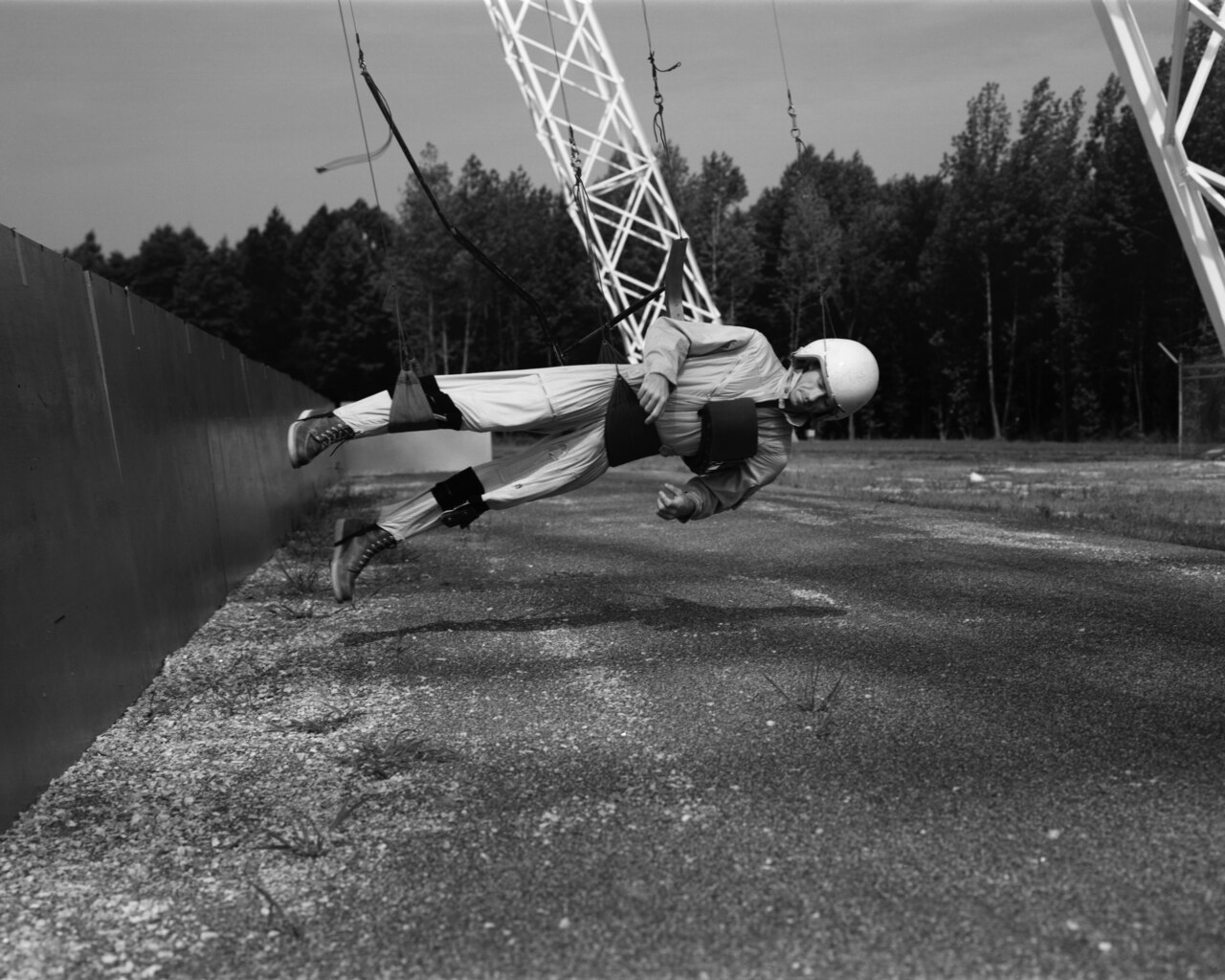
NASA Langley Research Center / NASA · Public domain
A walking simulator, often shortened to walking sim, is a type of adventure game focused on movement and interacting with the environment. These games typically lack combat systems and traditional win or lose conditions. Although the core ideas appeared in video games as early as the 1970s, the term "walking simulator" was first used pejoratively in the late 2000s, notably for games like *The Graveyard* (2008) and *The Path* (2009), before later being applied to *Dear Esther* (2012). Over time, the label became less derogatory and was adopted by players, though some developers still dislike it and it continues to carry a negative association with boring gameplay. Other names for this style include empathy game, narrative game, and exploration game. Walking sims are often considered art games, but some mainstream titles have also been described as having walking simulator elements.
- First known example
- Colossal Cave Adventure (1976) for text-based; early graphical examples predate The Forest
- Term coined
- Late 2000s, pejoratively for games like The Graveyard (2008) and The Path (2009)
- Breakout title
- Dear Esther (2012)
- Common descriptors
- Empathy game, narrative game, exploration game
- Notable mainstream example
- Death Stranding
- Controversy period
- Mid-to-late 2010s
Lore & Background
The earliest known walking simulator concepts trace back to text adventures like *Colossal Cave Adventure* (1976), which emphasized exploration without combat. For graphical examples, earlier titles predate the 1980s ZX Spectrum game *The Forest*. In 2003, [domestic], an art game developed by Mary Flanagan, reused first-person shooter environments to reconstruct a childhood memory of a fire. In 2004, Japanese developer Kikiyama released *Yume Nikki*, a game in which a girl explores dreams in her mind. In 2012, *Dear Esther*, a walking sim about exploring an unnamed island, was a breakout hit that popularized the modern incarnation of the walking simulator, receiving a large amount of positive critical acclaim. Despite receiving backlash, it was seen as a radical concept. It was directly followed by *Gone Home* in 2013—which was made by many of the team members of the DLC expansion *BioShock 2: Minerva's Den*, which featured an ending segment similar to walking simulators—*The Vanishing of Ethan Carter* in 2014, and, later, *Firewatch* in 2016. Walking sims started to be recognized by critics, though contrary to some claims, the 2016 BAFTA Games Award winners did not include three clear walking simulators; winners that year included *Fallout 4*, *Rocket League*, and *Her Story*.
Reader's Guide
Walking simulators have challenged traditional definitions of what constitutes a video game, particularly the requirement for challenge or fail conditions. The term originated pejoratively in the late 2000s, notably applied to Dear Esther, but was later adopted by fans and used as a descriptive tag on Steam. The genre remains controversial: 'hardcore' gamers and Gamergate proponents have argued walking sims are not 'real games,' while developers like Dan Pinchbeck, co-creator of Dear Esther, reject that narrow definition. Critics have praised walking sims for their artistic aspects, emphasis on decision-making and morality, and ability to create emotional responses by removing player agency. The genre has also incorporated horror elements, as seen in Outlast, Paratopic, and The Exit 8. Walking simulations remain primarily a product of indie developers, though some AAA titles like Death Stranding have been described as having walking simulator elements. In 2017, Nicole Clark of Salon.com called walking sims 'the most artful and innovative genre within video gaming,' and in 2019, Rachel Watts of PC Gamer stated that criticism over their mechanics has begun to shift.
Did You Know?
- The earliest known walking simulator concepts date back to text adventures like Colossal Cave Adventure (1976), not the 1980s ZX Spectrum game The Forest.
- The term 'walking simulator' was first used pejoratively in the late 2000s for games like The Graveyard (2008) and The Path (2009), not initially for Dear Esther.
- Three of the 2016 BAFTA Games Award winners were not walking simulators; the winners included Fallout 4, Rocket League, and Her Story.
- The Exit 8 is a walking simulator inspired by the 2014 P.T. demo, requiring
Roots and Reinvention: A Genre's Long Gestation
The walking simulator genre traces its lineage to the 1980s, when Graham Relf crafted The Forest, an orienteering simulation for the ZX Spectrum built around map-making and navigational skill. Though praised for its originality and given a commercial release, it and its sci-fi successor Explorer—featuring forty billion procedurally generated locations, rudimentary arrow combat, and teleportation—were panned for sluggish pacing and dismissed as tech demos. Both became commercial failures. The genre found renewed life through art-focused experiments: Mary Flanagan's 2003 title [domestic] repurposed first-person shooter environments to reconstruct a childhood fire memory, while Kikiyama's 2004 Japanese release Yume Nikki sent a girl wandering through her own dreams. The modern era crystallized in 2012 with Dear Esther, whose island exploration earned sweeping critical praise and was hailed as a radical concept. It ignited a wave of successors—Gone Home (2013), The Vanishing of Ethan Carter (2014), and Firewatch (2016)—and by 2016, three BAFTA Games Award winners were walking simulators, marking the genre's arrival on the mainstream stage.
Design Philosophy: Exploration Over Combat
Walking simulators place the player in an unfamiliar environment—ranging from the mundane to the fantastical—and task them with uncovering its details, learning who inhabits it, and gauging whether it poses a threat. Most titles deliberately omit combat, strategy, and economic systems, instead emphasizing decision-making, moral nuance, and environmental storytelling. The genre is predominantly an indie-developer space, though major releases like Death Stranding have been tagged as walking sims. A notable sub-strand borrows from horror: games such as Outlast and Paratopic strip away all combat ability, leaving players with no means to physically respond to frightening events. This removal of agency, combined with carefully placed visual and audio cues, generates a powerful emotional response. The Exit 8, inspired by the 2014 P.T. demo, asks players to repeatedly walk the same metro passage, turning around whenever they spot a difference, crafting a slow-burn psychological horror experience. These design choices underscore a core philosophy: tension and meaning emerge from observation and interpretation rather than reflexive action.
A Name Under Fire: The Pejorative Label
The phrase "walking simulator" entered gaming vocabulary in the late 2000s as a dismissive jab, most famously attached to Dear Esther. It carried the implication that the gameplay was tedious and mundane. Critics aligned with Gamergate and self-identified "hardcore" gamers argued that walking sims were not "real games" because they lacked challenge or a fail condition. Developers like Dan Pinchbeck, co-creator of Dear Esther, pushed back against this narrow definition, advocating for a more inclusive understanding of what a game can be. Over time, fans reclaimed the term, even adopting it as a searchable tag on Steam. It has also been deployed ironically—Bennett Foddy's Baby Steps, where you manually control each leg, was dubbed a "literal walking simulator." The debate persists: supporters point to the mental and physical health benefits of walking as evidence the label need not be derogatory, while detractors call it condescending, likening it to other dismissive internet epithets. Alternative descriptors like "empathy game," "narrative game," and "exploration game" circulate as gentler replacements, yet the original term shows no sign of fading.
Cultural Footprint and the Liminal Turn
Walking simulators have long been a hallmark of the art-game scene, yet their influence has bled into mainstream design, with titles like Death Stranding absorbing walking-simulator elements into AAA frameworks. The genre's artistic emphasis on decision-making and moral complexity has been widely appreciated and has influenced broader video game design. However, the mid-to-late 2010s saw growing discontent among "hardcore" gamers, and the Gamergate movement from 2014 amplified claims that walking sims were too "feminine" or "political" because they prioritized story over combat and often explored themes of race, class, and identity. Into the 2020s, the genre took a striking new aesthetic direction: a wave of titles embraced the liminal-space visual language, including Anemoiapolis (2023), The Exit 8 (2023), and Pools (2024). Despite these evolutions, walking simulations remain predominantly an indie-developer product, with AAA studios only tentatively dipping into the space. The genre's ongoing tension—between artistic ambition and expectations of mechanical challenge—continues to define its identity and its place in gaming culture.
Gallery





Frequently Asked Questions
What is a walking simulator?
A walking simulator is a genre of adventure game built around exploring environments and interacting with them, deliberately omitting combat mechanics and traditional win-or-lose objectives. The core concept traces back to text-based games in the 1970s, though the specific label didn't emerge until much later.
Where does the term "walking simulator" come from?
The phrase was coined in the late 2000s as a dismissive jab aimed at titles like The Graveyard (2008) and The Path (2009). Over time, players reclaimed the word, though a subset of developers still bristle at being categorized under it.
What is considered the first walking simulator?
Colossal Cave Adventure (1976) is generally recognized as the earliest text-based example of the genre's core ideas. Graphical predecessors also existed before the more well-known titles of the 2000s and 2010s.
What game made walking simulators mainstream?
Dear Esther (2012) is widely regarded as the breakout title that brought the genre into broader public consciousness. Since then, the label has been applied to a wide range of exploration-focused games, including mainstream titles like Death Stranding.
Why do some people dislike the "walking simulator" label?
The term originated as a pejorative, implying the games lacked meaningful gameplay or challenge. While the stigma has faded and many in the community now embrace the tag, a subset of developers still prefer alternative descriptors like "narrative game" or "exploration game."
More in Walking simulators 1-24
Spotted an error? Know more?
This is a living reference — every entry is fact-audited, and reader corrections feed straight into our audit queue. Suggest an edit · See this site's audit record