Ether One
A first-person adventure exploring memory and dementia.

Kenneth C. Zirkel · CC BY 4.0
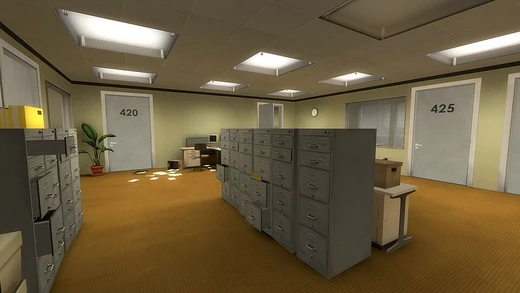
Ether One is a first-person adventure game released in 2014, developed and self-published by the Manchester-based studio White Paper Games. It was the studio's debut title, and its gameplay emphasizes exploration, puzzle-solving, and narrative, with themes dealing with mental illness and memory retrieval. The game received generally favorable reviews, with critics highlighting its atmospheric quality and realistic portrayal of dementia.
In the game, players take on the role of a "Restorer," a person who can project themselves into the mind of someone with a mental illness to help restore their memories. The setting is a virtual world, and the main location is the harbour town of Pinwheel, which players can explore non-linearly. The primary goal is to collect red ribbons tied to objects, which unlock "core memories." Once a core memory is accessed, the player photographs important objects from the patient's past. Scattered throughout the game are movie projectors; a broken projector indicates a puzzle, and solving it allows the associated memory to be played back. Puzzles range from physical tasks, like completing a cider shipment, to more mentally demanding ones, such as lighting a furnace by adjusting switches, adding a chemical, and timing clock rotations. These puzzles become increasingly complex and obtuse, reflecting the symptoms of dementia, but they are optional—players can ignore them and focus solely on the story. Previous areas can be revisited to fill in puzzle gaps. The game can take up to 20 hours to complete at a leisurely pace, or under five hours if puzzles are skipped. It is largely story-driven and contains no violence or sexual content, only mild profanity. A tutorial narration feature can be enabled.
The plot follows the Restorer's mission to enter the mind of Jean Thompson, a 69-year-old woman with dementia. As the Restorer explores her memories, they uncover the history of Pinwheel, Jean's personal life, and a tragic mining accident. Later, it is revealed that the Restorer is not Thomas; Thomas is Jean's husband, and the Restorer is a separate character, not explicitly Thomas. The game took about three years to complete and was influenced by *Dear Esther* and *Myst*. The development team went through many gameplay and narrative iterations, and they incorporated their own experiences with family members into the depiction of mental ill
- Developer
- White Paper Games
- Publisher
- White Paper Games
- Release Date (Windows)
- 25 March 2014
- Release Date (PlayStation 4)
- 5 May 2015
- Genre
- First-person adventure
- Platforms
- Microsoft Windows, PlayStation 4
- Engine
- Unreal Engine 3 (original Windows version); Unreal Engine 4 (PS4 and Redux update)
Lore & Background
Ether One is set within a virtual world where the player assumes the role of a "Restorer," tasked with reconstructing the memories of a dementia patient. The gameplay features non-linear exploration of the harbour town of Pinwheel and its surroundings, with the primary goal of collecting red ribbons to unlock core memories. Puzzles scattered throughout the game become increasingly complex and are designed to reflect the symptoms of dementia; these challenges are optional, allowing players to focus on the narrative if they prefer. The plot revolves around the Restorer's mission to delve into the mind of Jean Thompson, a 69-year-old woman diagnosed with dementia, gradually uncovering the history of Pinwheel, Jean's personal life, and a tragic mining accident. Notably, the Restorer is a separate character from Thomas, Jean's husband, and is not explicitly identified as him.
Reader's Guide
Ether One was developed by a core team of six at White Paper Games, taking approximately three years to complete. The game was influenced by titles such as Dear Esther and Myst, and the team incorporated their own personal experiences with family members into the depiction of mental illness. The game underwent numerous gameplay and narrative iterations before settling on the final version. Originally released for Microsoft Windows on 25 March 2014, it received generally favorable reviews, with critics praising its atmospheric and immersive experience. However, the narrative and puzzle mechanics received mixed feedback, with some reviewers finding the story fragmented and the puzzles cumbersome. A PlayStation 4 version was released on 5 May 2015, rebuilt in Unreal Engine 4 with graphical enhancements and additional language support; these improvements were later brought to the Windows version in a free Redux update on 28 October 2015. The game's depiction of dementia was noted for its realism, and its gameplay mechanics intentionally reflect symptoms of the condition, fostering empathy for those affected.
Did You Know?
- The game can be completed in less than five hours if the player ignores puzzles, or up to around 20 hours at a leisurely pace.
- The development team prototyped '50 or 60' puzzles, discarding those that could not be integrated engagingly into the level design.
- The game started as an action platformer before the team shifted focus to exploration.
- A tutorial narration feature can be optionally enabled.
Development & Creative Vision
White Paper Games, a small studio based in Manchester, created Ether One as their debut title and self-published it. The project consumed roughly three years of development, during which the team cycled through numerous iterations of both gameplay systems and narrative structure before arriving at the final product. Their design philosophy drew inspiration from atmospheric titles like Dear Esther and Myst, channeling that contemplative, exploration-first sensibility into a new context. What set the project apart was its deeply personal motivation: the developers wove their own experiences caring for family members living with mental illness into the game's portrayal of dementia, lending the subject matter an authenticity that went beyond surface-level representation. Rather than outsourcing or licensing, the studio handled both development and publishing independently, a bold choice for a first-time team. The result was a game that treated its central theme with genuine care, using interactive design not merely as entertainment but as a vehicle for empathy and understanding.
Gameplay & Dementia Mechanics
Ether One casts the player as a Restorer, a specialist who projects their consciousness into the damaged mind of a dementia patient to recover lost memories. The primary setting is Pinwheel, a harbour-side English town built around tin and iron mining, which players explore at their own leisurely pace. Progression hinges on locating red ribbons tied to objects throughout the environment; collecting ten in a given area unlocks a core memory, a 3D simulation where the player photographs significant items from the patient's past. Scattered across locations are broken movie projectors that signal puzzles, ranging from physical tasks like completing a cider shipment to intricate mental challenges such as timing furnace switches and chemical additions. Crucially, these puzzles grow progressively more convoluted, deliberately mirroring the cognitive chaos of dementia. They are entirely optional, meaning a player can skip them and still experience the full narrative. A hub area called The Case serves as a storage room for collected artifacts, many of which are deliberately irrelevant, reinforcing the uncertainty inherent in the condition. A full playthrough can stretch to twenty hours or compress to under five depending on puzzle engagement.
Narrative & Story
The story of Ether One centers on Jean Thompson, a sixty-nine-year-old woman whose deteriorating memory has become the subject of a clinical project at the Ether Institute of Telepathic Medicine. Dr. Phyllis Edmunds oversees the case, warning that Jean's file will determine whether the Institute retains its funding. The Restorer's job is to reconstruct Jean's fragmented past by navigating 3D simulations of her childhood in Pinwheel, a mining-dependent coastal village. As memories are pieced together, the player uncovers Jean's personal history, the town's industrial heritage, and a tragic mining accident that shaped the community. The narrative's most significant revelation arrives late in the game: the Restorer is not an anonymous professional but Thomas, Jean's own husband, who is secretly using the Institute's technology to treat his own dementia. This twist reframes the entire experience, transforming what seemed like a clinical exercise into an intimate act of mutual care. The story is delivered through non-linear exploration, with notes, phone recordings, and environmental details gradually assembling a coherent timeline that the player constructs at their own pace.
Release, Reception & Legacy
Ether One first arrived on Microsoft Windows on 25 March 2014, self-published by White Paper Games. Critical response was broadly positive, with reviewers singling out the game's atmospheric tone and its immersive, contemplative pacing. However, opinions on the narrative structure and puzzle design were more divided; some found the fragmented storytelling difficult to follow and the puzzles frustratingly opaque. The depiction of dementia, though, was widely acknowledged as strikingly realistic and empathetic. In May 2015, a PlayStation 4 edition launched, rebuilt entirely in Unreal Engine 4, which brought graphical improvements and expanded language support. Those enhancements were subsequently ported back to the Windows platform through a free Redux update released in late October 2015. As White Paper Games' first and defining title, Ether One established the studio's identity and demonstrated that a small, independent team could tackle a sensitive subject with both technical ambition and emotional depth, carving a distinctive niche in the adventure genre.
Gallery




Frequently Asked Questions
What is Ether One?
Ether One is a first-person narrative adventure released in 2014 that centers on exploring the fractured memories of a person suffering from dementia. The gameplay focuses on wandering through surreal environments, solving puzzles, and piecing together a story rather than combat or action.
What role does the player take on in Ether One?
You play as a "Restorer," a specialist who can enter and navigate the inner world of a patient experiencing mental illness. Your goal is to help them recover lost fragments of their identity and memory by moving through their distorted mental landscape.
What is the main theme of Ether One?
The game is fundamentally about dementia and the gradual loss of self, using a surreal, dreamlike setting to represent how memory fragments and distorts. It treats the condition with a degree of empathy and realism that reviewers singled out as particularly striking for a video game.
Who developed and published Ether One?
The game was both developed and self-published by White Paper Games, a small studio based in Manchester, England. It served as the studio's first released title, debuting on Windows in March 2014 before arriving on PlayStation 4 the following year.
What platforms can you play Ether One on?
Ether One is available on Microsoft Windows and PlayStation 4. The Windows version launched first in late March 2014, with the PS4 port following in May 2015.
More in Walking simulators 1-24
Spotted an error? Know more?
This is a living reference — every entry is fact-audited, and reader corrections feed straight into our audit queue. Suggest an edit · See this site's audit record