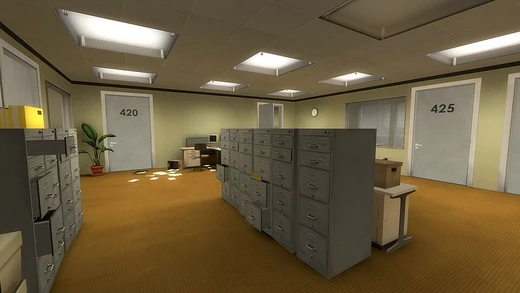
Leaving Lyndow
A short first-person adventure set before a dangerous expedition.

Leaving Lyndow is a first-person adventure game from Eastshade Studios, serving as a precursor to their larger open-world title, Eastshade. Though it shares the same world, it has its own gameplay and story. The game was revealed on January 11, 2017, and came out just weeks later, on February 8, 2017. To prevent confusion with the still-in-development Eastshade, the developer released a short video explaining the unusual format and the game's creation.
The story takes place on the island of Lyndow. You control Clara, a recent graduate of the Guild of Maritime Exploration, who is getting ready for a long, dangerous research trip. Over the course of the game, you talk to her friends and family, learning how they feel about her leaving. It is Clara's final day on the island where she grew up. Having graduated with high honors and achieved her childhood goal of joining the Guild, she must finish her preparations, visit her favorite spots, and say goodbye—before departing on a journey she might not survive. The game focuses on the moments just before her departure, not the voyage itself.
Played from a first-person view, the game includes light puzzles and mini-games, but most interaction happens through dialogue trees. Players have some freedom in the order they explore environments, but the experience is mostly linear and ends the same way every time.
Eastshade Studios created Leaving Lyndow alongside Eastshade using existing assets, rather than pausing work on the larger game. In a video for fans, the developer gave three reasons for this approach: they wanted experience releasing a game before tackling the bigger Eastshade, they hoped the smaller game's revenue would help fund the larger one, and they believed it would deepen the Eastshade universe. The game uses many assets and technologies from Eastshade, but its story and some environments were made specifically for it. Development took about six months.
According to Metacritic, Leaving Lyndow received mixed or average reviews. The most common criticism was its short length. Kotaku's Nathan Grayson noted it resonated with anyone who has left home, helping him process upcoming goodbyes. VideoGamer's Alice Bell praised its well-written characters, and Polygon's Colin Campbell appreciated its "niceness." CGMagazine's Lane Martin called it a beautiful, fascinating paid commercial for Eastshade, more a 45-mi
- Developer
- Eastshade Studios
- Publisher
- Eastshade Studios
- Release Date
- February 8, 2017
- Genre
- First-person adventure
- Platform
- Not specified in source
- Metacritic Rating
- Mixed or average
Lore & Background
Leaving Lyndow takes place on the island of Lyndow. The player controls Clara, a recent graduate of the Guild of Maritime Exploration, who is preparing to embark on a long and dangerous research expedition. Throughout the game, the player speaks to Clara's friends and family, learning about their feelings regarding her departure. The story concerns Clara's last day on the island, as she completes preparations, visits her favorite places, and says her goodbyes before leaving on a journey she may not return from. The game does not depict the journey itself.
Reader's Guide
Leaving Lyndow was developed by Eastshade Studios as a deliberate detour from their larger title Eastshade. The developer released a video explaining that the reasons for creating Leaving Lyndow were threefold: to gain experience shipping a game before attempting the larger Eastshade, to use the game's revenue to supplement Eastshade's funding, and to enrich the Eastshade universe. The game uses much of the assets and technology from Eastshade, though story content and some environments were made uniquely for the title. Development took about six months. The game received mixed or average reviews, with common criticism that it was too short. Some reviewers praised its writing and emotional resonance, while others called it a commercial for the upcoming Eastshade. Its legacy lies in being a small-scale proof of concept that helped fund and inform the development of its larger successor.
Did You Know?
- Leaving Lyndow was announced on January 11, 2017, less than a month before its release on February 8, 2017.
- The game was developed in about six months using assets and technology from the larger title Eastshade.
- Eastshade Studios stopped development of Eastshade to make Leaving Lyndow, with plans to continue afterward.
- The developer released a video explaining the reasoning behind the small title's odd format and development.
More in Walking simulators 1-24
Spotted an error? Know more?
This is a living reference — every entry is fact-audited, and reader corrections feed straight into our audit queue. Suggest an edit · See this site's audit record